Example case study. The company in this article is a composite, built from patterns we see in regional media companies. It is not a client, and every number below is illustrative. Our real client results are on the Client Business Impact page.
Picture a 40-year-old regional media company with a television station, a radio group, a live events business and about $80 million in revenue. Three generations of one family have run it. One Tuesday a documentary producer emailed to ask for ninety seconds of footage from a river flood in 1989. The producer offered $38,000 for the license and gave the company two weeks. Nobody at the company could find the tape, and nobody could say who owned the rights to the interviews on it. The offer expired. The CEO asked a question that sounds small: what exactly do we own?
Nobody at the company could find the tape, and nobody could say who owned the rights to the interviews on it.
What Was in the Vault?
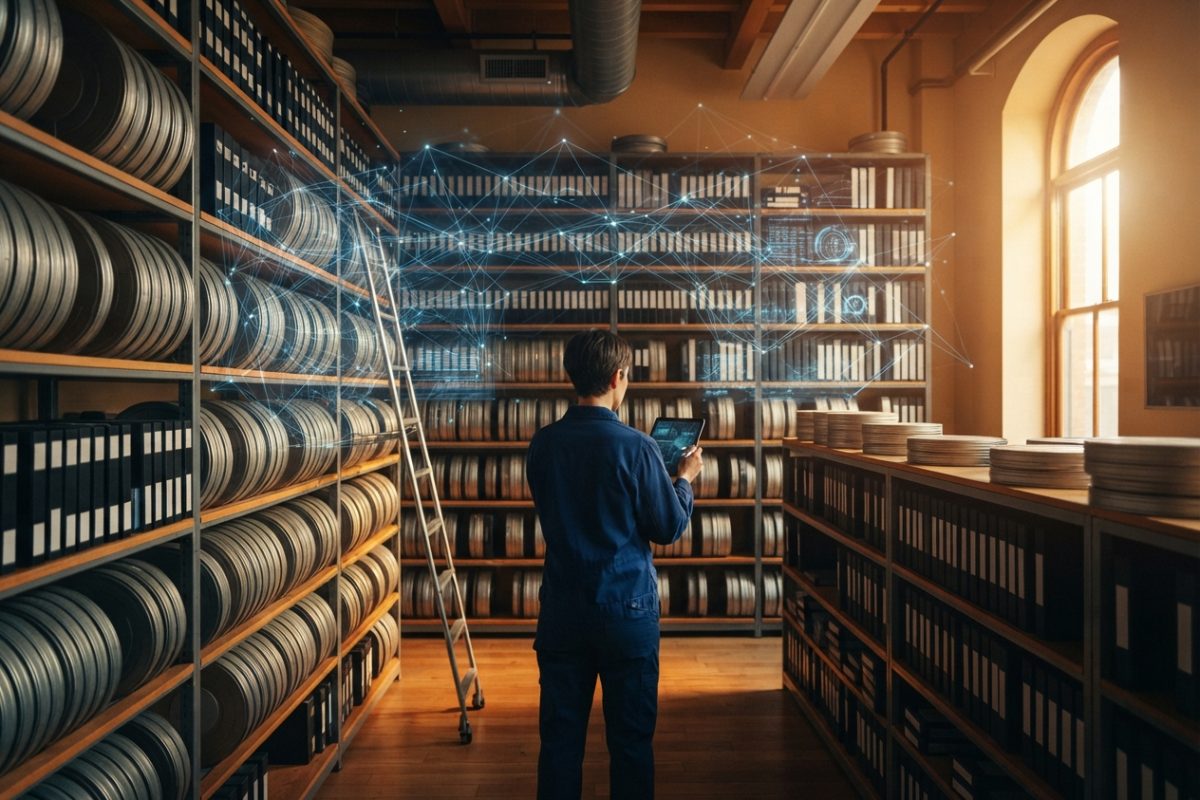
The CEO asked for an inventory, and the first estimate was eleven weeks of work for four people, done by hand. Item one was the tape library, about 31,000 hours of broadcast footage on formats that no machine in the building could still play. Roughly a third of it had never been logged at all. Item two was the radio archive, 14,000 hours of local interviews, high school games and call-in shows, stored as digital files with names like “final_v2”. Item three was the events collection, photos and video from four decades of fairs, concerts and festivals, some of it shot by freelancers who never signed a clear release.
Item four was the least visible and the most important: the audience. The company had a television rating, a radio rating, an email list of about 40,000 names, an app, a ticketing system for events and a customer file for advertisers. None of them talked to each other. A person who watched the news, listened to the morning show and bought festival tickets was three different people in three different systems.
What Did Each Item Turn Out to Be Worth?
The company did not hire four people for eleven weeks. It digitized the tapes worth saving and ran everything through software that transcribes speech, tags faces and scenes, and flags the places where a rights question might exist. A search that once took a producer a day now took a few minutes. In the first six months the tools found about 2,300 hours of footage that was clearly licensable: floods, elections, championship games, the opening of the stadium, the closing of the mill. This is the kind of local history that documentary makers, schools and museums pay for.
The radio archive was worth less in dollars and more in goodwill. Transcripts made 600 interviews with local figures searchable, and about 40 percent of them could be cleared quickly. They became an anniversary series and a podcast that cost almost nothing to produce. The events collection was messy. Freelancers had to be found, thanked and asked to sign, and some could not be found at all. That work was slow and unglamorous, and it taught the team its most useful lesson. Rights data turned out to be worth more than the footage.
Rights data turned out to be worth more than the footage.
A clip that cannot be cleared cannot be sold, and a clip that can be cleared in an afternoon can be sold to the next producer who asks. The company built a simple rights register, one line for each piece of footage with who shot it, who appears in it and what was agreed. It was the least exciting thing the company built, and it carried most of the value.
Who Was Watching?
The audience work took longer. Using the app, the email list, the ticketing records and the website, the company matched people across its systems, with clear consent rules and an easy way out. Over eighteen months the 40,000 names grew to about 310,000 known viewers, listeners and ticket buyers. For the first time a sales team could say to a car dealer, here are 22,000 people in your market who attended an event last year, and here is what they watch. That is a stronger pitch than a rating, because it is specific.
Known audiences also changed what the company made. It stopped producing a weekly show that the data showed nobody finished, and put the money into a local sports package that drew people back every week. Its events team used the same file to sell tickets before a public announcement, which filled two festivals earlier than ever.
What Did the Company Get Back?
Here are the illustrative numbers. The work cost about $1.6 million over two years, mostly for scanning, software and the time of a small team. In year two the archive earned about $1.4 million in licensing, up from under $100,000 before. Producers and editors, who had spent about six hours of an average day searching for clips, now spent about forty minutes. Sponsorship revenue tied to the known audience grew by roughly 9 percent. None of these figures belong to a real company, but they show the kind of arithmetic a CEO should ask for.
What Did the Family and the Staff Think?
The owning family had mixed feelings. The archive was part of the family story, and some members worried that selling footage would cheapen it. The CEO answered with a rule: nothing goes into the licensing catalog without a person at the station saying it is fine, and some collections would stay closed. That rule cost little and settled the argument. Staff reacted in a different way. Longtime editors, who had been quietly afraid that software would replace them, found that they were the people who knew what the footage meant. A 30-year photographer could look at a tagged clip and say that the tag was wrong, the mayor in it was the previous one, and the date was off by a year.
The company turned that knowledge into a job. It created a small archive desk of four people, two of them retired staff brought back part time, who review what the software tags and decide what goes into the catalog. The software did the volume, and the people supplied the judgment. A buyer who is paying for a clip cares more about whether it is accurate and cleared than about how fast a machine produced the metadata.
There was also a quieter benefit in the newsroom. Reporters now had search that worked, so a story about a school closing could pull the board meeting from 1996 in a minute, and a short documentary could be put together from the company’s own material in a week. The archive stopped being a basement and became a working tool, used every day by the people who sell, report and produce.
Why Is This a Rising Bar Business?
On our 2026 AI Dividend Map, media sits in the Rising Bar group. Generative tools have made it cheap for anyone to produce video, audio and images, and every competitor, large or small, now has those tools. The cost of making content keeps falling for everyone, so making more of it is no longer an edge. Anyone can now make a video; nobody else can make the 1989 flood. The value moves to what only this company has: its archive, its rights and its relationship with the people who watch. The framework is in our piece on the four shapes of the AI dividend.
Anyone can now make a video; nobody else can make the 1989 flood.
What Should a Media CEO Ask Before Starting?
Ask four questions. Can we say, within a day, what we own and who holds the rights to it? How many of our viewers, listeners and ticket buyers do we know by name, and with their permission? How many hours a week do our producers spend looking for things we already have? And what would we say to a buyer who asked for our catalog tomorrow? A CEO who cannot answer the first question has an asset that nobody can price.
Decide, too, how much of the archive you want to sell and how much you want to keep. Some footage defines the station’s place in the community and is worth more as a reason people trust you than as a license fee. The inventory lets you make that choice on purpose, instead of finding out when a producer calls.
What This Will Not Do
An inventory will not clear rights that were never granted, and some of the footage will stay locked away for good. Search tools make mistakes, so a person must check anything that is licensed or published. A licensing business takes years to build, and one good year does not make a trend. This is one picture built to show a pattern, and your archive and your numbers will differ.
Where to Start
Pick one decade of your archive and inventory it completely, including who owns the rights to every item. Count the hours and write down what you find, including the surprises. That one decade will tell you whether the rest is worth the work. An experienced CIO through CIO IQ at $1k per week can help you sequence it, and our AI and IT assessment can size it first. See our media page, and reach us through the contact form on the about page.