
In Homer’s Odyssey, the Lotus-Eaters are a people “trapped” in a state of terminal, honey-sweet contentment. They weren’t being tortured or oppressed; they were simply sedated into irrelevance. Once a traveler tasted the lotus fruit, they lost all desire for home, duty, work, and progress. They were happy to sit exactly where they were until they withered away.
In boardrooms and C-suites across the mid-market, “Tech Stability” is the modern-day lotus fruit.
It is served at every quarterly review where a CIO reports nothing other than “no major outages” and “no budget variances”. In the moment, it tastes like success. It feels like a job well done. It’s certainly better than the CIO having a misstep to apologize for and strategize around, right? …Or is it?
Because for the mid-market enterprise, this brand of stability is a narcotic. While you are savoring the quietude of a “stable” IT environment, you are actually accumulating a massive, un-callable loan of technical debt and operational atrophy as an island in the middle of the fastest period of innovation the world has ever seen.
In a world defined by exponential technological shifts, standing still isn’t a neutral act; it is a slow-motion retreat.
The Myth of the “Safe” Baseline
The fundamental error in legacy IT management is the belief that maintaining the status quo is a zero-cost activity. We tend to view risk through a binary lens: Action (Risky) vs. Inaction (Safe).
However, the “safe” baseline is a moving target. If the market is accelerating at 20% year-over-year and your infrastructure is standing still, you aren’t “stable”, you are receding. This is the Invisible Tax on the Status Quo. Unlike a line item on a P&L, you won’t see it until the bill comes due all at once. By then, the cost to modernize often exceeds the organization’s total capital capacity.
Let’s look at the financial math for the CFOs out there… calculating the increased energy required to “catch up” at different points in time. If we represent the effort required to innovate as a function of time “t” and the complexity of legacy systems “C“, and the exponential acceleration of market expectations “A“, the curve becomes daunting. The total effort “E” required to modernize can be visualized as:
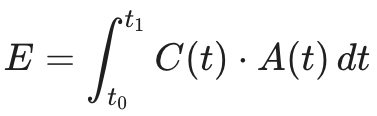
Where E is the total energy (cost/effort) required to catch up and modernize, C(t) is the mounting complexity of outdated systems – (linear or slight faster), and A(t) is the accelerating pace of market expectations (absolutely exponential right now). As t increases without intervention, the “energy” required to catch up eventually exceeds the organization’s total capital capacity.
What feels like “saving money” by “not fixing IT if it’s not broken” is in fact negligent ignorance of some of the highest self-funding ROI possible in business today. What’s worse, it doesn’t really avoid those upgrade costs, but only defers them at an enormously high interest rate and forecloses self-funding paths, all the while expanding the capability gap to where it may not even be recoverable.
– Jeff Roberts, CEO, Innovation Vista
Lessons from the Giants · The Price of the Lotus
Large-cap companies often survive the “Status Quo Tax” simply because they have the sheer mass to absorb the blow. They suffer billion-dollar bruises that would be fatal to a mid-market firm.
Southwest Airlines · The Scalability Meltdown
For years, Southwest was the darling of efficiency. Behind the scenes, however, they relied on a 1990s-era crew scheduling system. Leadership prioritized immediate operational profits over a total overhaul of their backend. They chose the “stable” lotus fruit of a known system. During the 2022 winter holidays, that system reached a breaking point. While competitors recovered from a storm in 24 hours, Southwest’s tech collapsed, leading to 17,000 canceled flights and an $800 million loss. They survived, but the brand damage was tectonic.
Intel · The Stagnation of Silicon
Intel was the undisputed king of the hill, yet they became so comfortable in their x86 dominance that they treated mobile and AI as “distractions.” They sat under the lotus tree while NVIDIA and AMD built the future. By early 2026, Intel faced its most brutal period in history – 15,000 layoffs and a private-equity-backed restructuring. They are currently fighting for their lives to prove they aren’t obsolete.
Raytheon · The Legacy Hardware Crisis
Even in the defense sector, the status quo is a killer. Raytheon found itself unable to meet skyrocketing demand for Stinger missiles because they had “frozen” the production technology in the 1970s to save on costs. When the world demanded volume in 2022, they had to call 70-year-old employees out of retirement to teach current staff how to build the missiles manually. Their “stable” tribal knowledge had never been digitized, resulting in a 30-month production lag.
The Mid-Market Death Spiral
For a 2,000-person firm or a mid-cap enterprise, these kinds of mistakes don’t lead just to “bad quarters”; they can be “lights out” events.
A mid-market company doesn’t have the $800 million cushion of a Southwest or the federal subsidies of a Raytheon. When the “Status Quo” Lotus finally reveals its poison, the failure modes are quiet, then sudden.
The Talent Drain
Top-tier engineers and strategic thinkers don’t want to be museum curators. They want to build with modern stacks. When you stay “stable,” your best people leave first. You are left with a team that is either unable or unwilling to innovate, effectively locking the doors from the inside.
The Integration Gap
Every year you delay modernizing, the gap between your legacy systems and modern APIs grows. For a mid-market firm, the cost of “bridging” that gap eventually becomes so high that the business becomes un-acquirable and un-competitive. You are tethered to a legacy vendor’s roadmap because migrating would be “too risky,” handing over your strategic autonomy to a third party.
The Shadow IT Explosion
Your departments will eventually start buying their own SaaS solutions because the internal IT process is too slow. This creates a nightmare of fragmented data and security holes. You end up paying for IT twice: once for the “stable” core that does nothing, and once for the disparate tools your team actually uses to get work done.
Stability vs. Resilience · A Dangerous Confusion
Many leaders mistake stability (the absence of change) for resilience (the ability to withstand change).
A “stable” IT environment is often brittle. It’s a glass sculpture: functional as long as nothing touches it. But the moment the market shifts (e.g. a sudden regulatory change or a disruptive AI entrant) the glass shatters.
Truly resilient organizations embrace Productive Friction. They understand that systems naturally decay. By constantly “disturbing” the status quo through continuous integration, modular architecture, and a culture of experimentation, they build systems that are flexible enough to pivot without breaking.
| Feature | The “Stable” Approach | The “Innovative” Approach |
| Risk Profile | Low daily risk / Terminal long-term risk | Moderate daily risk / Low long-term risk |
| Budget Focus | 80% Maintenance (Dead Capital) | 60% Innovation (Growth Capital) |
| Staffing | Generalists / “Keepers of the Box” | Specialists / Product-driven Builders |
| Reaction Time | Months to Years | Weeks to Months |
Waking Up · Breaking the Lotus Habit
Breaking the cycle of the status quo requires a radical shift in perspective. You must stop viewing IT as a utility that should be “stable and quiet” and start viewing it as a Competitive Engine that should be “dynamic and impactful”.
At Innovation Vista, we believe the “Safe” path is often actually the most dangerous one of all. To stop eating the lotus, a leadership team must:
- Elevate the conversation to the board of directors: Is the board the lotus-eater in your organization, or are they the lotus eater’s primary care physician assuming “no news is good news”?
- Quantify “Dead Capital”: Report on what percentage of the budget is spent maintaining systems that provide zero competitive advantage and will not contribute to future success.
- Incentivize Decommissioning: Reward teams that find ways to kill old processes and automate their own jobs.
- Prioritize Agility over Uptime: The wild west is not the right answer either, but the key is to come to the realization that a platform with 99.9% uptime but 0% flexible is a liability – and might be a death sentence.
The “Stable” IT department is a quagmire of wasted potential. The longer you stay, the harder it is to leave. The only way to reach the future is to stop eating the fruit, stand up, and start thinking strategically about the part tech will need to play in your corporate vision.